
How Living Roof Systems Are Reshaping Modern Cities
Cities continue to grow upward, often at the expense of green space. As urban areas become denser, the need for solutions that support both sustainability and livability becomes more urgent. Green roofs offer a practical and visually striking way to bring nature back into built environments while delivering real environmental benefits. These living roof systems transform unused rooftop space into functional, eco-friendly assets. NYC green roofs support sustainability by improving insulation, stormwater management, and urban air quality.
A green roof does more than add plants to a building. It creates a natural layer that helps regulate temperature, reducing heat absorption during warmer months and providing insulation when temperatures drop. This moderation can ease the demand on heating and cooling systems, supporting energy efficiency over time. In busy urban settings where heat retention is a constant issue, green roofs help soften extreme conditions and contribute to a more balanced climate.
Sustainability is at the core of green roof design. Vegetation absorbs rainwater, slowing runoff and easing pressure on drainage systems during heavy storms. This natural process reduces the risk of flooding while improving water management in areas where infrastructure is already strained. Plants also filter airborne pollutants and capture carbon, supporting cleaner air in environments often dominated by concrete and traffic.
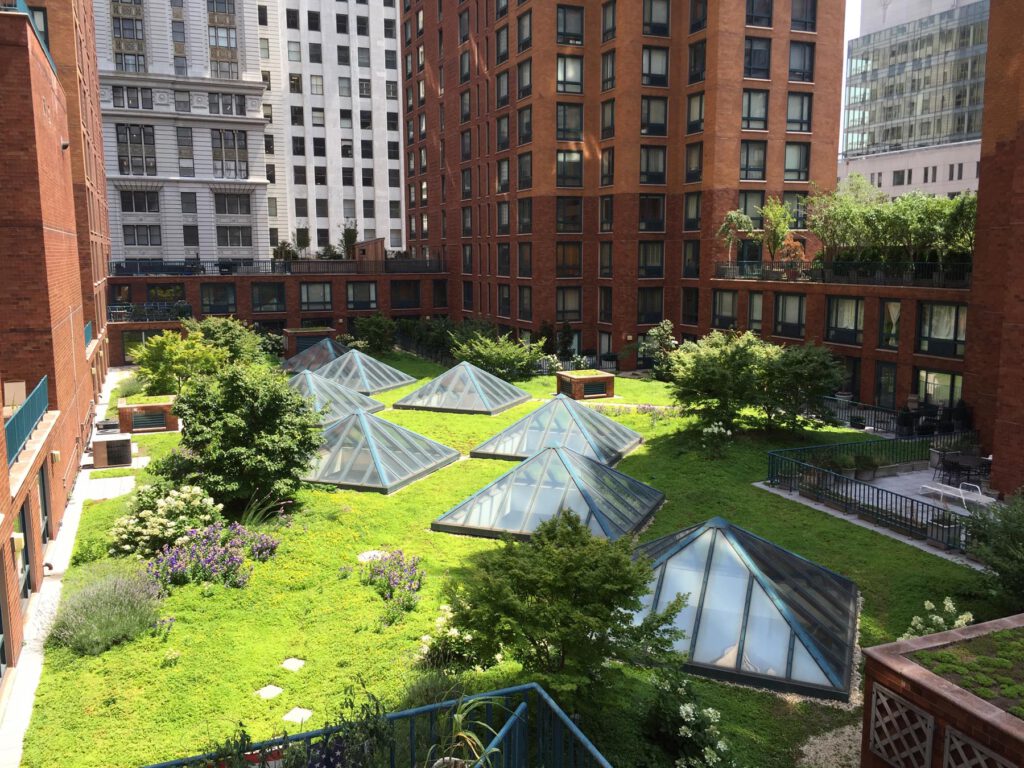
Urban spaces benefit visually as well as environmentally. Green roofs change how buildings interact with their surroundings, replacing flat, lifeless surfaces with living landscapes. Whether viewed from above or experienced directly, these spaces add character and calm to city environments. They can also support biodiversity by providing habitats for birds and insects that struggle to find space in dense urban areas.
Beyond environmental impact, green roofs contribute to the longevity of buildings. The protective layers shield roofing materials from direct exposure to sun, wind, and temperature fluctuations. This added protection can extend the lifespan of the roof while reducing maintenance demands over time. The result is a solution that balances long-term performance with environmental responsibility.
Green roofs represent a shift in how urban spaces are designed and valued. They prove that sustainability and functionality can coexist without sacrificing aesthetics or practicality. As cities look for smarter ways to grow, green roofs stand out as a thoughtful approach to improving urban life, one rooftop at a time.
…